Entrada #1
Social Construct
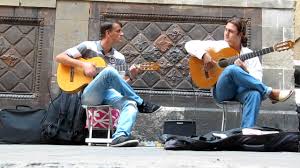
As I have been immersed in a new culture these past few weeks, I have recognized the ties between different cultures in various social aspects. One of these ways is through music. In Spain, music is a large part of the culture and it can be found in every town in Spain in some form (Meaney & Viguer, 2016). Music is also important in America and everyone listens to some sort of music. It has been really cool to see musicians on the streets of Spain and observing the importance of it to Spain’s society. Music is one of the things that can translate from culture to culture and everyone can relate to it, which is quite unique. Even though the words may not translate from language to language, the rhythm and beats are the same all over the world. Music is an amazing part of all societies and I have loved getting to experience it in the Spanish culture.
Spaniards vs. Americans, What’s the Difference?

In Madrid, I have noticed a larger population of homeless people and beggars on the streets than in Barcelona and Granada. Unfortunately, I have also observed that people interact with this population the same way people do in America. People avoid eye contact, walk obviously around the person, and just in general act as though they don’t exist. I would argue that people ignore people even more here than they do in America, which is hard to do. I have looked in the cups of these people, and there is significantly less money in them than there would be in America. While I do not agree with people giving homeless people money, I was surprised by the lack of attention this population received. I think this is due to the idea of Spaniards keeping their personal lives to themselves and not wanting to share personal details with each other (Livermore, 2015). As someone who has worked with the homeless population and have learned about them, I have been taught to offer these people a smile or a “Hello” as I pass to make them aware that I notice them and care about them. However, that is not an acceptable action in that kind of relationship in Spain, which challenged me in that setting. When everyone else was ignoring them, I felt like I should be doing more, but I didn’t know how to culturally approach the situation.
What About Me?

On Monday, some of us had the opportunity to go to a Spain soccer game against Sweden. This was an amazing experience because soccer is a huge part of the culture of Spain. In the 1950’s, it became the most popular sport in the country and people enjoyed watching the national teams, rec teams, and even children that played the game at an early age. (Meaney & Viguer, 2016). This experience was amazing for me because I grew up playing and watching soccer, and it is a very important part of my hometown. It was special to see professionals play live and partake in the atmosphere of the game. One thing that was strange for me was watching a game where I did not know the language of either team. I did not know what the announcements said, what the chants were, or what the fans of the opposing team were yelling at us. Even though this was a challenge, it made the experience feel more authentic and special.
Entrada #2
Social Construct

Government is an important aspect of Spain’s society because it is important for the citizens of Spain to trust and honor the king and queen. Post the Franco-regime, Spain has worked toward a stable democracy and it achieved it in the late 1900’s (Meaney and Viguer, 2016). From what I have observed relating to interactions with and about the king, most Spaniards honor the king and queen, which is important in a healthy government. One way I was able to see this honor was through the elaborate decorations and style of the royal palace. The tour guide also seemed to talk highly of the royal family. Also, at the bull fight, the guests of the show stood, clapped, and waved at the king when he entered. These actions indicated that the king and queen are important to the society of Spain and are a staple to the function of the country.
Spaniards vs. Americans, What’s the Difference?
Spain is a very friendly and welcoming culture, and the people value relationships and conversations. They welcome people easily and quickly adopt people as friends and family (Meaney & Viguer, 2016). One of the ways this value of relationships is displayed is through the kissing on both cheeks when meeting or greeting someone. This time and patience in the greeting shows the value that Spaniards have of people and time spent with one another. This tradition is particularly comfortable for me as I am not a physical touch kind of person, but it has been unique to see Spaniards greet each other in that way. They always talk with care and concern and seem to genuinely want to know how the person is. In America we often ask how someone is to be nice, but in Spain they genuinely care about one another.
What About Me?

Arguably, one of the most cultural things I had the opportunity to do this week was attend a bull fight. I am so thankful that I had the opportunity to experience this very cultural activity, but I was surprised by my reaction to the fight. I was raised in a very rural area, and farming and hunting are a huge part of my family and my town. I am used to the idea of killing animals and eating the meat, but for some reason the bull fight bothered me more than I expected. In talking to some other people in attendance, I realized why. Growing up, it was part of our lives to kill animals, but we were always taught not to make the animal suffer. During the bull fight, the bulls were very obviously suffering and were in pain long before they died. It is difficult for me to say that bull fights are wrong because they are not part of my culture and it is wrong for me to judge another culture. Spaniards view it as a delicate art and enjoy the art of the fight (Meaney & Viguer). However, I recognized that the sport is not particularly my choice of entertainment. I am still so thankful that I experienced the fight because it was a unique cultural experience, but I am not sure if I will ever return to a bull fight.
Entrada #3
Social Construct

One of the biggest differences I have observed between American culture and Spanish culture is the difference between the awareness of waste. In America, we are quite wasteful and are not socially aware of the implications of our waste. We do what is convenient and comfortable and do not consider the larger social implications. In Spain, the society is very aware of the implications of waste and try to prevent it in many ways (Meaney & Viguer, 2016). One way I directly experienced it was at the soccer game when I was using the bathroom. When I went into the stall, I discovered there was no toilet paper and nowhere that toilet paper belonged. After I used the restroom, I was talking to other people in our group and realized that there is one roll in the main area of the bathroom that everyone needs to get from before entering the stall. This experience was quite unexpected, but it helped me to reflect on the intentions that the Spaniards have to not be wasteful and do actions that help preserve their culture, society, and the world.
Spaniards vs. Americans, What’s the Difference?

One of the biggest worries about walking the city streets of Spain was the women that force plants into people’s hands and then expect people to pay them. Every time we saw these women, I got quite nervous that they would approach me, and I would not be forceful enough to get away. Luckily, I was able to avoid being stopped, but these women made me aware of the difference between Spaniards and Americans related to force and expressing themselves. In America, people would not be that forward and forceful, but in Spain, it is quite normal to have someone be forward. While America has an indirect relationship style, Spaniards are very direct and do not shy away from what they want to communicate (Livermore, 2015). Whether it is verbally or forcing plants into people’s hands, you never seem to have to guess what a Spaniard is thinking.
What About Me?

As we wrap up the end of our time here in Spain, I have been challenged with the feelings I have been experiencing. When evaluating how to develop CQ Drive, one of the steps is to be honest with yourself (Livermore, 2015). This is not a particularly easy task for me, but I have been trying to be self-aware and evaluate my feelings so I can develop a plan that is best for me. In being honest with myself, I have realized that I am a bit more introverted that I realized before this trip. While I love being around people, and I get my energy from socialization and relationships, I have also been recognizing that I need some alone time as well. On a trip of this nature, it is difficult to find that alone time to rejuvenate and rest. This has been a challenge for me as I have been trying to navigate how to rest from socialization, but it has also been helpful to recognize this need and develop myself as a person.










 Spain!