Entrada #1
Social Construct

One of the most significant differences I noticed between the societies of America and Spain was the transportation that Spaniards use through the city. In America, the most popular vehicle on a city road is a car. In Barcelona, I was struck by the number of residents that used mopeds to navigate the city. In America, people purchase motorcycles for a thrilling experience or for a social activity. They are not common forms of transportation and are often viewed as dangerous. In Spain, these vehicles are quite common and are a widely accepted mode of transportation. They are so common that other drivers know to watch out for them, they have designated parking areas for them (which were filled), and they even park them on sidewalks like bicycles. Based on the information in CultureSmart!, Spaniards are aggressive drivers and often find the most efficient way to get to their destination. Mopeds provide this speedy travel because they are easy to drive and can be maneuvered in between lanes of traffic which can avoid long traffic lines.
Spaniards vs. Americans: What’s the Difference?

In the interactions I witnessed today in Barcelona, I was surprised by the differences in language within verbal conversations. In America, the greater population speaks only English and only knows a few words in Spanish. Most people cannot communicate with people who speak other languages, even in their employment positions. In today’s activities, I noticed a large number of Spaniards who could speak English as well as Spanish. Even people who worked in shops, restaurants, and museums could communicate in English. One of the employees at the church told us to “Form two lines, please.” In America, I would argue that most people who work in museums could not tell people to form two lines in Spanish. As is mentioned in CultureSmart!, Spaniards are very friendly and hospitable in nature. This attribute likely contributes to their efforts to speak the language of many of the tourists they encounter. In America, people often view Americans as being superior and are not very hospitable to people from other cultures.
What About Me?
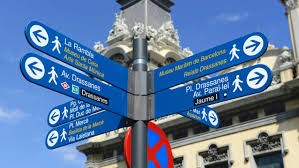
Within the activities we participated in today, I had some opportunities to reflect on my own views and behaviors. One of the most challenging parts of the day was the free time we had in the afternoon. During the free time, I was excited to explore the city within small groups, but I was continually nervous about getting lost or getting into an unfamiliar situation. While I know that I can get lost just as easily in a city in America, I was nervous because I know that I do not speak the native language. This would make it quite difficult to communicate to someone where I needed to be and how to get there. I also do not recognize a lot of the landmarks I may use in America because I do not know many of the words used on store fronts. Where in America I may say, “We need to get back to the Wendy’s on 7th Avenue,” it is much more challenging to do so in an area where I do not know the language or any helpful landmarks.
Entrada #2
Social Construct

Today in Montserrat, I was made aware of the difference between the religion I am familiar with in America and the religion I have experienced in Spain. Based on the sites we have visited thus far, it is obvious that Spaniards emphasize detail and symbolism in their places of worship. While churches in America are typically simpler and are more like an ordinary building, places of worship in Spain use intrinsic details and ornaments to create an ideal house of worship. In Spain, the Catholic Church is a large part of their culture, as CultureSmart! mentions, and they use symbolism and images from the religion to create their worship places. The detail shows the respect the Spaniards wish to provide God through worship. The Spanish church seems to more heavily emphasize rituals, repetition and symbolism rather than the personal relationship many churches in America emphasize.
Spaniards vs. Americans, What’s the Difference?

When it comes to conversations, Spaniards and Americans seem to view them differently. As I have taken notice, our group often seems to be the loudest in the public areas we have visited. While that can partially be contributed to the size of our group, we even seem to be louder than other groups our size. I am noticing that Americans seem to be louder than other people, which may contribute to the negative opinion some other cultures occasionally have of Americans. I think this is also related to cooperative versus competitive social structures. In general, I think that Americas are competitive in their relationships and conversations. Everyone wants to tell the best story, the funniest joke, or add the most insightful comment. With everyone competing with their input, conversations tend to get loud and it can be difficult to understand what anyone is saying. On the other hand, Spaniards seems to be more cooperative in their relationships and have more respectful and quiet conversations. They speak in their turn and with respect which allows everyone to be heard and understood.
What About Me?
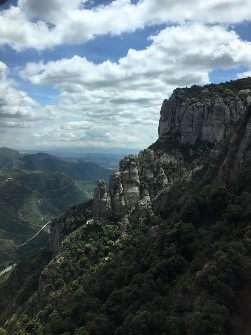
In my own journey through this trip, I have been working to find the right balance between experiencing and relaxing, which has been difficult at times. I love exploring new things and being engaged in new experiences. Because visiting Spain is probably a once in a lifetime opportunity for me, I want to see and do as much as I can while I am here. However, I also want to take time to rest and relax so I don’t become fatigued. I don’t want to pack so much into a day that I don’t have time to enjoy each thing or I am too tired to enjoy them. I have found it challenging to balance these two dynamics and explore and see all that I can, but while also making rest a priority. As one of the ways to develop CQ drive, I am trying to be honest with myself when I recognize that I need to take a break and rest.
Entrada #3
Social Construct
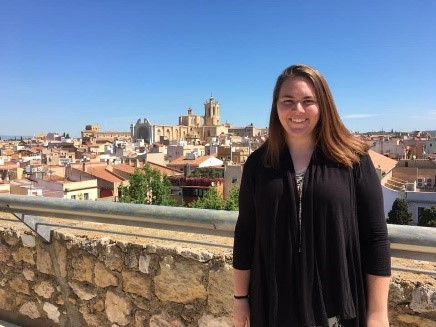
During our first week here, I have been trying to observe as much as possible around me. I have been watching people, listening to information about the country, and talking to people to try to gain insights into the Spanish society. One observation I made regarding the social norms of Spain is the neutral vs. affective social system. In America, we tend to be very expressive in our words and actions. In particular, most Americas smile broadly when they are having their picture taken, which relates to an affective society. In Spain, I have observed that many Spaniards do not smile for pictures which suggests a neutral social structure. The small difference in how the two societies take pictures transfers to many other social aspects like eye contact when passing on the streets, conversations with strangers, and more.
Spaniards vs. Americans, What’s the Difference?
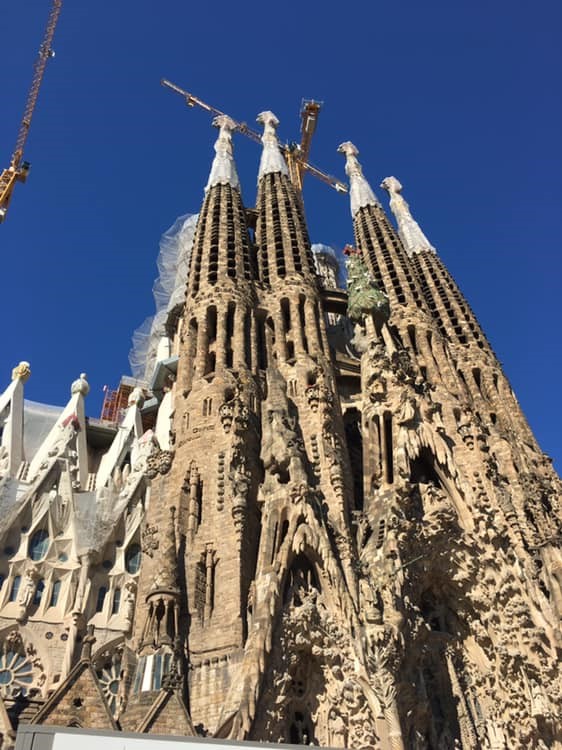
When it comes to speaking what’s on your mind, Spaniards are very direct on the direct vs. indirect relational scale. While Americans are usually indirect and relay messages through non-verbal cues or passive behavior, Spaniards are very direct and do not beat around the bush. One specific example is our tour guide at La Sagrada Familia. While he was speaking to us, he turned around and told a woman to please move because he was there first and he was with a group. Most Americans may give an elbow bump, push a little or just move, but he was quite direct and told her how he felt. I have also witnessed other small cases where people have put their hands on strangers shoulders and moved them slightly out of the way. All of these situations exemplify the direct relational aspect of Spaniards which is much different from the indirect relationships Americans are used to.
What About Me?

Today I encountered a situation very different from one I have experienced before. I am used to being in the majority group of people because I am a white heterosexual in America. During my time at Messiah, I have learned a lot about the experiences of people in minority groups and how degrading those experiences can be. Today, being a minority in a foreign country, I was able to see a glimpse of this feeling. While our group was in a convenience store, one of the employees walked over and followed us around and watched us. I have heard that this is a common occurrence for some people in America. I felt judged, untrustworthy and like an outsider. Although this one experience is nothing compared to the lifetime that some people experience it, the scenario was humbling in considering my privilege as a white person in America.

 Spain!